Blog Archives
A Guide To Tool And Die Manufacturing
April 5th, 2026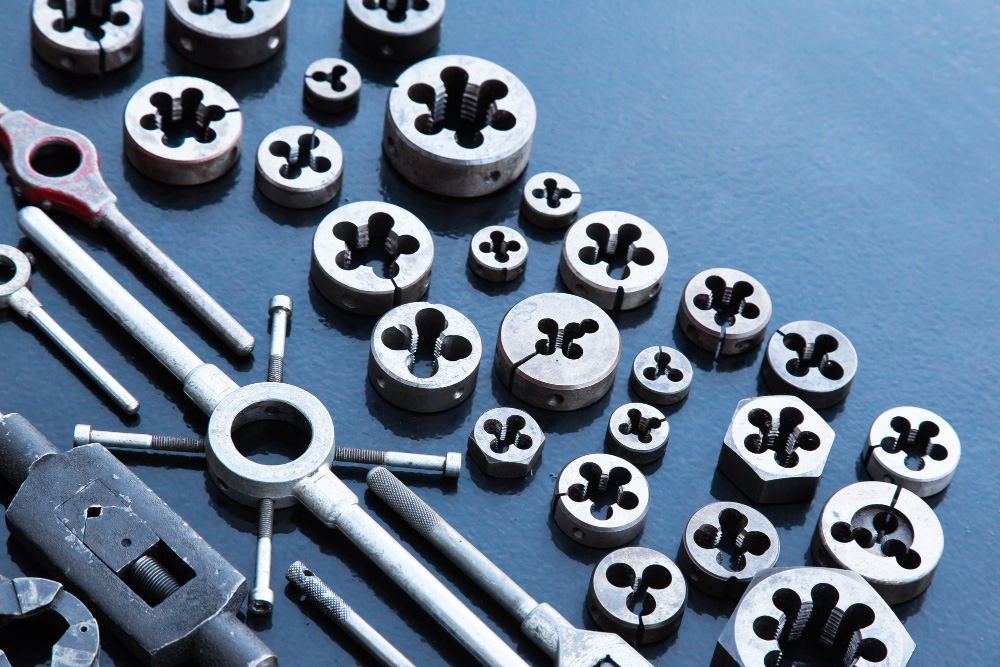
Metal parts used in vehicles, appliances, electronics, and medical devices often begin long before production lines activate. They begin in a tool room. The accuracy of each stamped component depends on how well the tool and die system was designed, machined, fitted, and tested. A slight flaw at this stage can echo through thousands of parts later.
Tool and die work shapes how metal flows, bends, cuts, and forms under pressure. This discipline stands at the center of repeatable, high-volume metal stamping success across industries.
What “Tool and Die” Really Means in Manufacturing
The terms tool and die often appear together, yet they represent two related ideas. A tool is any mechanical device that cuts, forms, holds, or guides metal during fabrication. Fixtures, jigs, cutting tools, gauges, and molds all fall under this category. A die is a specific type of tool that changes the shape of metal through cutting or forming.
In metal stamping, dies carry the responsibility for shape. They determine hole placement, bend radii, draw depth, and part profile. Tools such as fixtures and jigs guide how the material moves through the process and how machines interact with the part. Together, they create the physical foundation that allows metal stamping to produce consistent parts at scale.
The Role of Tool and Die in Metal Stamping Accuracy
Every stamped part reflects the precision of its die. If clearances are off by fractions of a millimeter, burrs appear. If alignment shifts, hole patterns drift. If forming surfaces lack proper polish, surface finish degrades. Tool and die work removes these risks before production begins.
This preparation supports:
- Predictable part geometry
- Stable tolerances across long production runs
- Reduced scrap and rework
- Faster cycle times during progressive die stamping
Without well-built dies and supporting tools, even advanced presses and materials cannot achieve consistent results.
Tool Making vs. Die Making
Tool making covers a wide range of devices used during manufacturing. This includes fixtures that hold parts in place, jigs that guide tools, cutting implements, and specialized gauges used for inspection.
Die making focuses only on tools that shape metal. Dies cut blank shapes, punch holes, create bends, or form drawn features. These dies often consist of multiple components assembled into die sets, each part machined with extremely tight tolerances.
In progressive die stamping, a strip of metal travels through several stations inside one die set. Each station performs one action. The accuracy of every station depends on the craftsmanship of the die maker.
How Tool Rooms Connect With Production Floors
Tool and die engineering usually takes place in tool rooms, separate from production areas. These environments house skilled machinists and toolmakers who build, fit, and test dies before they reach the press.
This separation allows focused craftsmanship. Once dies move to the production floor, machinists and press operators rely on that prior work to maintain steady output. When problems arise, tools return to the tool room for adjustment or repair.
This relationship between tool room and press floor creates a feedback loop that strengthens long-term production stability, especially for custom metal stamping services where part designs vary.
The Importance of Clearance, Fit, and Tolerance
Die components operate with minimal clearance. Punches and die openings must align precisely to cut clean edges without excessive burr formation. Forming surfaces must match design intent to control how metal stretches during bends and draws.
Tool and die makers routinely machine parts to tolerances smaller than one-thousandth of an inch. This level of precision determines:
- Edge quality after cutting
- Bend accuracy after forming
- Part repeatability in high volumes
- Tool life across long runs
Poor clearance leads to rapid wear, damaged parts, and frequent downtime.
Jigs and Fixtures: Supporting Accuracy Beyond the Die
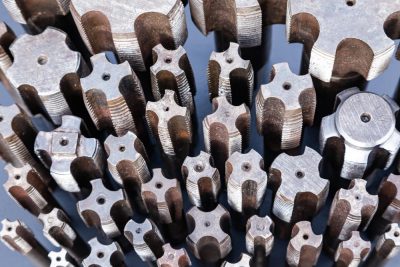
Jigs and fixtures do not shape metal, yet they guide how parts move through manufacturing. A jig directs a cutting tool. A fixture holds the workpiece in a fixed position.
These devices reduce variation. They keep parts aligned for secondary operations such as tapping, welding, or inspection. Even in automated environments, fixtures hold value because every part still requires stable positioning during production.
For sample stamping and short runs, jigs and fixtures allow testing and validation before final dies enter high-volume production.
Tool and Die Engineering for Progressive Die Stamping
Progressive dies contain multiple stations, each performing a step in the part’s formation. The strip feeds forward after each press stroke. Timing, alignment, and station layout must work in harmony.
Tool and die engineers plan:
- Strip layout and progression sequence
- Carrier design to hold parts through stations
- Punch placement for hole accuracy
- Forming stations for bends and drawn features
Any mistake at this stage affects every part made afterward. This is why progressive die stamping depends heavily on tool and die expertise.
Training and Skill Behind Tool and Die Work
Tool and die makers usually complete years of on-the-job training combined with classroom study. Many follow structured apprenticeship programs that build skills in machining, materials science, blueprint reading, and precision measurement.
These professionals work as artisans within manufacturing. They interpret part drawings and translate them into physical tools capable of producing thousands or millions of identical components.
Their knowledge extends beyond metal. Plastics, wood, pneumatics, and electronics often appear in fixture and jig construction. This broad expertise supports diverse manufacturing environments.
How Talan Products Advances Tool and Die Excellence
At Talan Products, tool and die design stands at the center of our high-volume metal stamping work. Our teams build dies that support progressive die stamping, and aluminum extrusion fabrication with long-term accuracy. Nearly 40 years of experience, ISO 9000:2015 registration, and strong customer partnerships guide every project.
Connect with us to turn precise tooling into reliable production results.
